
How to Get Rid of Dark Circles: The Complete Treatment Guide

After all the late nights, early mornings, and maybe one too many happy hours, those pesky dark circles can start to feel like a permanent, uninvited guest. Or maybe genetics is just playing a cruel joke on you.
Either way, there are practical, effective ways to tackle them — no miracles required. Whether yours are brown, bluish, or hollow-looking, this guide covers exactly what works and why. Let’s dive in.
First Things First: Not All Dark Circles Are the Same
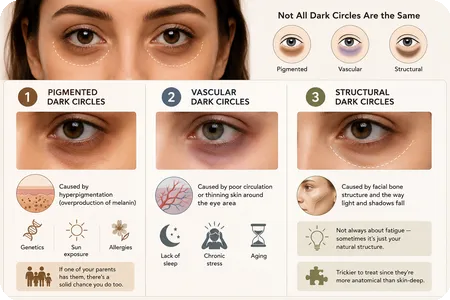
Understanding which type of dark circle you have is the most important step toward treating them effectively. There are three main types, each with different causes — and different solutions.
1. Pigmented Dark Circles
These show up as brownish discoloration beneath the eyes and are caused by hyperpigmentation — an overproduction of melanin. Common triggers include genetics, sun exposure, and certain allergies. If one of your parents has them, there’s a solid chance you do too.
2. Vascular Dark Circles
Bluish or purplish in tone, these result from poor circulation or thinning skin around the eye area. Lack of sleep, chronic stress, and aging are the usual culprits.
3. Structural Dark Circles
These appear as shadows shaped by the contours of your facial bone structure. It’s not always about fatigue — sometimes it’s just the way light falls across your under-eye area. These tend to be trickier to treat since they’re more anatomical than skin-deep.
How to Treat Pigmented (Brownish) Dark Circles

Sunscreen Is Your Best Friend
UV rays worsen pigmentation — even when you’re indoors. A broad-spectrum sunscreen with SPF 30 or higher should be a non-negotiable part of your morning routine, every single day.
Power Up with Vitamin C
Vitamin C is a powerhouse antioxidant that inhibits melanin production and brightens skin over time. The key here: don’t use a standard vitamin C serum on your eye area — it can cause serious irritation and burning. Instead, reach for an eye cream specifically formulated with vitamin C. Use it daily and apply it with a gentle tapping motion under the eyes.
Chemical Peels
Professionally administered chemical peels using glycolic acid, lactic acid, or kojic acid can meaningfully improve pigmented dark circles. They work by exfoliating dead skin cells and stimulating cellular turnover — essentially giving the skin around your eyes a fresh start. Do not attempt these at home. Seek out a licensed dermatologist.
Topical Lighteners
Ingredients like hydroquinone, kojic acid, niacinamide, and licorice extract are clinically proven to reduce pigmentation over time. Look for an eye-area-safe formula and apply consistently — results take weeks, not days, but they do come.
Laser Treatments
Q-switched lasers target melanin directly, breaking it down beneath the skin’s surface. It requires multiple sessions and professional supervision, but for stubborn pigmentation, it delivers some of the most significant results available.
How to Treat Vascular (Bluish/Purplish) Dark Circles

Cold Compress
Old-school, but genuinely effective. Applying a cold compress, chilled spoons, or even cucumber slices to your under-eyes helps constrict blood vessels and reduce swelling, making those bluish circles appear noticeably lighter. Keep metal spoons in the fridge overnight for a ready-to-go morning treatment.
Caffeine Eye Creams
Caffeine is one of the most well-researched ingredients for vascular dark circles. It constricts blood vessels and reduces puffiness quickly — think of it as your morning coffee, but for your eye area. Look for it near the top of an eye cream’s ingredient list for maximum potency.
Prioritize Sleep and Elevation
Seven to nine hours of quality sleep makes a real difference. Bonus tip: try sleeping with an extra pillow to slightly elevate your head. This discourages fluid from pooling around your eyes overnight — the reason you often look more puffy after sleeping flat on a couch.
Retinoids
A gentle retinol or retinaldehyde eye cream used consistently can thicken the delicate skin beneath your eyes over time, making underlying blood vessels less visible. Start slowly — two to three nights per week — and watch for any sensitivity before building up frequency.
Hyaluronic Acid
Hydration plays a bigger role than most people realize. Eye creams with hyaluronic acid draw moisture into the skin, plumping it up and making vascular discoloration less prominent. Think of it as giving your skin barrier a tall glass of water.
LED Light Therapy
Red and blue LED lights have been shown to stimulate circulation and reduce inflammation in the under-eye area. At-home devices are widely available and work well with consistent use — or book a session at a med spa for a more intensive treatment.
How to Treat Structural (Hollow) Dark Circles
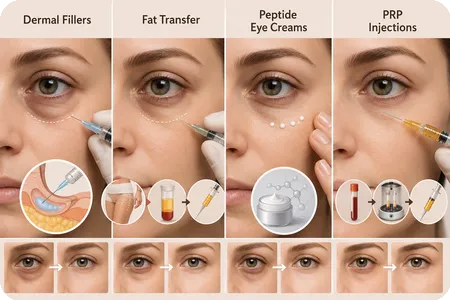
Dermal Fillers
Hyaluronic acid-based fillers injected into the tear trough — the groove between your lower eyelid and cheek — can dramatically reduce the appearance of shadowing by restoring lost volume. Results are immediate and can last anywhere from one to two years. Always go to a board-certified dermatologist or plastic surgeon for this procedure.
Fat Transfer
A more permanent solution: fat is harvested from another area of your body (typically the thighs or abdomen) and injected beneath the eyes. Because it uses your own tissue, the results tend to be long-lasting. It’s a surgical procedure, so choose your provider carefully.
Peptide Eye Creams
Topical peptides stimulate collagen production over time, gradually plumping the skin and softening structural shadows. While they won’t produce the dramatic results of injectables, consistent daily use can meaningfully improve the look of hollowness — no needles required.
PRP (Platelet-Rich Plasma) Injections
A small sample of your blood is drawn, processed to concentrate the growth factors, and injected back into your under-eye area. PRP boosts collagen production and improves both skin texture and volume. Results build gradually over several months. As with all injectables near the eyes, this should only be performed by an experienced medical professional.
The Bottom Line
There’s no one-size-fits-all fix for dark circles — but there is a targeted approach for every type. Identify whether yours are pigmented, vascular, or structural, then choose the treatments that address the actual cause. With the right routine — and a little patience — brighter, more rested-looking eyes are absolutely within reach.