
How to Get Rid of Back Acne: 6 Proven Rules That Actually Work
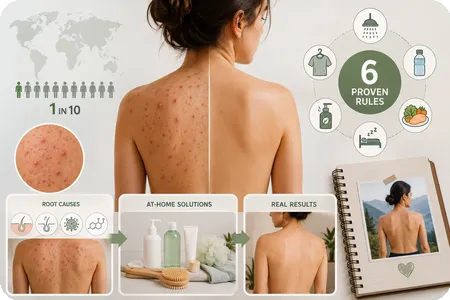
Back acne — or “bacne” as most people call it — is one of those frustrating skin issues that just won’t quit. You’re not alone in this. Research shows that back acne affects roughly 1 in 10 people globally, making it one of the most widespread skin conditions worldwide. Whether it’s stubborn cysts, scattered pimples, or those annoying red bumps along your shoulders, bacne is way more common than you think.
The good news? You can absolutely tackle it at home — no expensive treatments required. In this guide, we’re breaking down the root causes, the best home remedies, and six lifestyle rules that genuinely work. We’ll also share a real personal journey from someone who battled bacne for nearly a decade before finally cracking the code.
What Is Back Acne and Why Does It Happen?
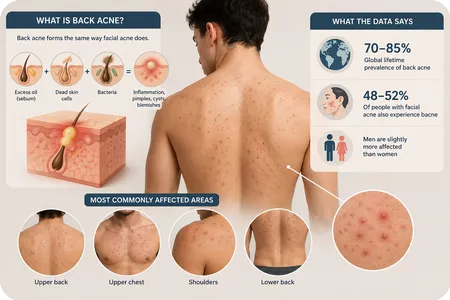
Back acne forms the same way facial acne does. Hair follicles on your back and shoulders get clogged with excess oil (sebum), dead skin cells, and bacteria — leading to inflammation, pimples, cysts, and blemishes.
Here’s what the data says:
- Back acne has a global lifetime prevalence of 70–85%
- About 48–52% of people with facial acne also experience bacne
- Men are slightly more affected than women
- The upper back, upper chest, shoulders, and lower back are the most commonly affected areas
Common Causes of Back Acne
Hormonal Changes Hormonal shifts — especially during puberty — trigger excess oil production, which clogs pores. That’s why bacne is so prevalent in teenagers, though it can absolutely persist into adulthood.
Sweat and Friction Sweating creates the perfect breeding ground for bacteria. Pair that with tight clothing rubbing against your skin, and you’ve got a recipe for breakouts.
Non-Breathable Fabrics Synthetic gym wear and tight clothes trap sweat and bacteria against your skin. If your workout gear isn’t breathable, it could be making things worse.
Poor Hygiene Skipping showers after sweating allows oils, dirt, and bacteria to sit on your skin — and that leads to acne fast.
Diet and Supplements This one surprises a lot of people. Certain supplements (especially cheap weight gainers) and processed, oily foods can throw your hormones off balance and trigger breakouts.
A Real Story: Nearly a Decade of Bacne — Then a Breakthrough

One of the most common experiences people share is noticing bacne as a teenager and assuming it would fade on its own. It doesn’t. For many, it spreads to the shoulders and becomes a source of real self-consciousness — avoiding tank tops, skipping the pool, covering up even in the summer heat.
The turning point for many people is identifying the cause. In this case, it was a cheap weight-gain supplement taken years earlier that had been quietly disrupting hormone levels the whole time. Once the root cause clicked into place, treating the problem became straightforward.
The result? Clear skin — without prescriptions or expensive procedures — just consistent lifestyle changes and a few simple remedies.
Best Home Remedies for Back Acne
1. Tea Tree Oil + Apple Cider Vinegar Solution
Tea tree oil is a natural antibacterial powerhouse — it targets the bacteria that cause acne. Apple cider vinegar (ACV) balances your skin’s pH and creates an environment where bacteria struggle to thrive.
How to use it: Mix 1 tablespoon of ACV with water and a few drops of tea tree oil. Apply gently to your back using a cotton pad. Fair warning — the smell is strong. But the results are worth it.
2. Aloe Vera Gel
Aloe vera soothes inflammation, speeds up healing, and keeps skin hydrated. Apply fresh aloe vera gel mixed with a pinch of granulated salt directly to your back, let it sit for about two hours, then rinse off in the shower. Your skin will thank you.
DIY Exfoliating Scrub Mix equal parts sea salt or sugar with coconut oil for a natural scrub. The granules remove dead skin while the oil moisturizes — gentle enough for regular use.
Oatmeal Mask Blend oats into a powder, mix with water into a paste, and apply to affected areas for 20 minutes. Great for calming irritated skin.
Raw Honey Spot Treatment Honey has natural antibacterial properties. Dab raw honey on individual spots and leave it on for at least 30 minutes before rinsing.
6 Golden Rules to Prevent and Treat Back Acne
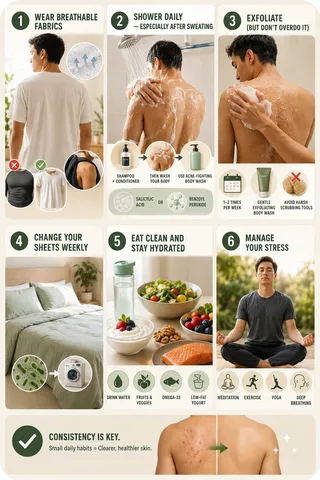
These are the lifestyle changes that make the biggest long-term difference:
Rule 1: Wear Breathable Fabrics Ditch tight, synthetic clothes whenever you can — especially at home. Loose, airy fabrics like cotton keep sweat from sitting on your skin. Also be mindful of backpack straps and bag straps, which can cause friction and slow healing.
Rule 2: Shower Daily — Especially After Sweating This is non-negotiable. Shower every day, and always shower after working out. Pro tip: shampoo and condition your hair first, then wash your body — that way any hair product residue gets rinsed off your back instead of sitting on it.
Use a body wash formulated for acne-prone skin, ideally one containing salicylic acid or benzoyl peroxide.
Rule 3: Exfoliate (But Don’t Overdo It) Exfoliating removes the dead skin cells that clog pores — but overdoing it strips your skin and makes things worse. Aim for 1–2 times per week with a gentle exfoliating body wash. Avoid harsh scrubbing tools that cause micro-tears.
Rule 4: Change Your Sheets Weekly Your bed sheets absorb oils and bacteria from your skin every night. If you’re not washing them weekly, you’re basically re-applying that buildup to your back every time you sleep. Weekly changes make a noticeable difference.
Rule 5: Eat Clean and Stay Hydrated Cut back on oily, processed, and sugary foods. Load up on water, fruits, vegetables, and omega-3s. Low-fat yogurt is a great daily addition — it supports gut health, which is more connected to skin health than most people realize.
Rule 6: Manage Your Stress Stress spikes cortisol, which throws hormones out of balance and triggers breakouts. Regular meditation, light exercise, yoga, or even just deep breathing can make a real difference for your skin.
What NOT to Do
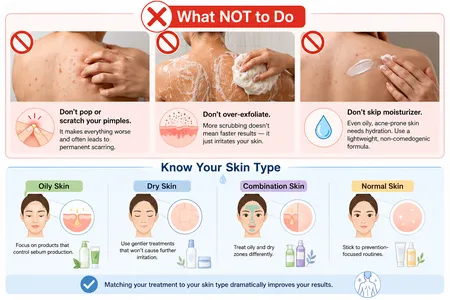
- Don’t pop or scratch your pimples. It makes everything worse and often leads to permanent scarring.
- Don’t over-exfoliate. More scrubbing doesn’t mean faster results — it just irritates your skin.
- Don’t skip moisturizer. Even oily, acne-prone skin needs hydration. Use a lightweight, non-comedogenic formula.
Know Your Skin Type
Treating bacne effectively starts with understanding your skin:
- Oily skin — Focus on products that control sebum production
- Dry skin — Use gentler treatments that won’t cause further irritation
- Combination skin — Treat oily and dry zones differently
- Normal skin — Stick to prevention-focused routines
Matching your treatment to your skin type dramatically improves your results.
When to See a Dermatologist
Home remedies work well for mild to moderate bacne. But if you’re dealing with painful cystic acne, deep nodules, or breakouts that aren’t responding to anything you try — it’s time to see a dermatologist.
They can help with:
- Prescription-strength topical or oral treatments
- Chemical peels or light therapy
- Corticosteroid injections for cystic acne
- Personalized dietary and lifestyle recommendations
There’s no shame in getting professional help — sometimes the situation calls for it.
The Bottom Line
Clearing back acne takes consistency, not miracles. Combine the right home remedies with these six lifestyle rules, stay patient, and you will see results. Most people notice real improvement within two to three months of sticking to a routine.
Start with the basics: breathable clothes, daily showers, a salicylic acid body wash, clean eating, and stress management. Add in natural remedies like tea tree oil and aloe vera. And if things are stubborn, don’t hesitate to bring in a dermatologist.
Clear, confident skin is absolutely within reach — it just takes the right approach and the commitment to stick with it.
Medical Disclaimer: This article is for informational purposes only and is not a substitute for professional medical advice. Always consult a qualified healthcare provider for persistent or severe acne conditions.