
15 Best Collagen-Rich Foods for Anti-Aging Skin

If you’re serious about aging gracefully, what’s on your plate matters just as much as what’s in your skincare cabinet. This guide breaks down the best collagen-rich foods to eat every day for firmer, healthier, more youthful-looking skin — no injections required.
Why Your Skin Needs Collagen
Collagen is the most abundant protein in your body. It’s the structural scaffolding that keeps your skin plump, firm, and elastic. But here’s the problem: your body’s natural collagen production begins to slow in your mid-twenties — and by the time you hit your forties and fifties, that decline becomes significant.
The result? Sagging skin, deeper wrinkles, dryness, and that loss of that lit-from-within glow.
The good news is you don’t have to just accept it. Research shows that a decline in the enzyme responsible for collagen synthesis drives much of this aging process — and what you eat can directly influence how well your body produces and protects its collagen supply.
Whether you eat meat or follow a fully plant-based diet, there are powerful collagen-rich and collagen-boosting foods you can add to your routine starting today.
What Collagen Actually Does for Your Body

Beyond skin, collagen is a building block for:
- Hair and nails — strength and growth
- Bones — density and structure
- Muscles — elasticity and recovery
- Joints, tendons, and ligaments — flexibility and cushioning
When collagen levels drop, the effects ripple through your entire body — not just your complexion. Supporting collagen through diet is one of the smartest, most natural things you can do to age well from the inside out.
The 15 Best Collagen-Rich Foods to Eat for Younger-Looking Skin
1. Bone Broth
Bone broth is one of the richest direct dietary sources of collagen available. It’s loaded with collagen peptides, amino acids, and minerals that nourish your skin, support joint health, and strengthen your gut lining. Sipping on a warm mug daily is one of the easiest ways to boost your intake.
2. Salmon (Especially With the Skin On)

Salmon packs a double punch: marine collagen and omega-3 fatty acids. The omega-3s help fight inflammation — one of the biggest accelerators of skin aging — while keeping your complexion supple and hydrated.
3. Eggs
Don’t sleep on eggs as a collagen food. Egg whites are rich in proline, one of the key amino acids your body uses to build collagen. The yolk adds a bonus: vitamin A and healthy fats that support overall skin health.
4. Citrus Fruits (Oranges, Lemons, Limes, Grapefruit)
Vitamin C is non-negotiable for collagen synthesis — your body simply cannot produce collagen without it. Citrus fruits are among the best sources. They also act as antioxidants, shielding your skin from free radical damage that speeds up aging.
5. Berries (Blueberries, Strawberries, Blackberries, Raspberries)
Berries are antioxidant powerhouses. They protect the collagen you already have from oxidative breakdown while simultaneously supporting your body’s ability to produce new collagen. Add them to your smoothie, oatmeal, or snack on them fresh.
6. Leafy Greens (Spinach, Kale, Swiss Chard)
Dark leafy greens bring a triple benefit: vitamin C for collagen synthesis, chlorophyll that may boost collagen precursors in the skin, and a rich antioxidant profile that protects against cellular damage. Eat them raw in salads or cooked — both work.
7. Avocados
Avocados are loaded with vitamin E, a fat-soluble antioxidant that helps maintain your skin’s moisture barrier and guards against collagen degradation. Their healthy monounsaturated fats also help your body absorb fat-soluble vitamins that support skin repair.
8. Tomatoes

Tomatoes contain lycopene, one of the most potent antioxidants for skin protection, along with a solid dose of vitamin C. Together, they help shield your skin from UV-related damage and oxidative stress — two of the leading drivers of premature aging.
9. Nuts and Seeds (Pumpkin Seeds, Chia, Flaxseeds, Almonds)
This group delivers zinc, vitamin E, and skin-supporting healthy fats — all essential for maintaining collagen production and elasticity. Pumpkin seeds are especially high in zinc, which plays a direct role in collagen synthesis.
10. Garlic
Garlic is a surprisingly powerful collagen ally. It contains sulfur compounds that help your body synthesize collagen and slow its breakdown over time. A little goes a long way — cook it into your meals daily.
11. Bell Peppers (Red and Yellow)

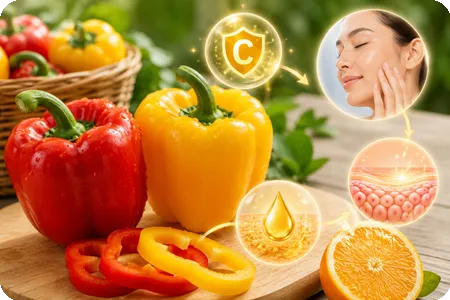
Red and yellow bell peppers contain even more vitamin C than oranges, making them one of the best plant-based collagen boosters on the list. They’re also rich in beta-carotene, which your body converts to vitamin A for skin repair.
12. Soy Foods (Edamame, Tofu, Tempeh)
Soy contains genistein, a plant-based compound that may stimulate collagen production and slow the skin-aging enzymes that break collagen down. It’s an excellent option for anyone eating plant-based.
13. Sweet Potatoes and Carrots
Both are loaded with beta-carotene, which converts to vitamin A in the body. Vitamin A is essential for skin cell turnover and collagen integrity — and it’s what gives these orange-hued foods their deep, rich color.
14. Shellfish (Oysters, Shrimp, Crab)

Shellfish are among the best dietary sources of zinc and copper — two trace minerals that directly stimulate collagen formation and support wound healing. If you eat seafood, adding shellfish to your weekly rotation is a smart move.
15. Green Tea
Green tea is rich in catechins, plant compounds that help prevent collagen breakdown and improve skin elasticity over time. Swapping one cup of coffee for green tea daily is a simple upgrade with real skin benefits.
Easy Ways to Add These Foods to Your Daily Routine
You don’t need an overhaul — small, consistent changes are what actually stick:
- Morning: Blend a smoothie with spinach, frozen berries, chia seeds, and a splash of citrus
- Mid-morning: Sip a warm mug of bone broth instead of a second coffee
- Lunch: Build a salad with avocado, pumpkin seeds, grilled salmon, and leafy greens
- Dinner: Stir-fry tofu or shrimp with bell peppers, garlic, and a side of sweet potato
- Snack: Fresh oranges, a handful of almonds, or hard-boiled eggs
- Swap: Replace one daily coffee with green tea for added antioxidant protection
Tips for Plant-Based Eaters
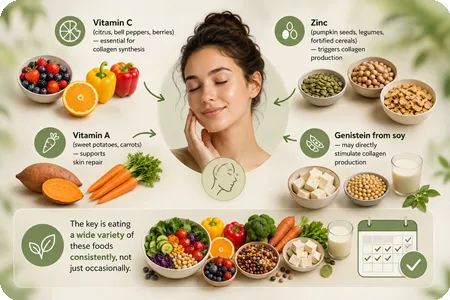
If you’re vegan or vegetarian, you’re not out of luck. While plant foods don’t contain collagen directly, they supply everything your body needs to produce it naturally:
- Vitamin C (citrus, bell peppers, berries) — essential for collagen synthesis
- Zinc (pumpkin seeds, legumes, fortified cereals) — triggers collagen production
- Vitamin A (sweet potatoes, carrots) — supports skin repair
- Genistein from soy — may directly stimulate collagen production
The key is eating a wide variety of these foods consistently, not just occasionally.
How to Store These Foods for Maximum Freshness
- Bone broth: Make large batches and freeze in mason jars or ice cube trays for easy daily use
- Berries: Refrigerate fresh berries and use within 3–5 days, or keep a bag of frozen berries on hand
- Nuts and seeds: Store in airtight containers in a cool, dark place — or refrigerate to prevent rancidity
- Leafy greens: Wrap in a paper towel, seal in a container, and refrigerate to extend freshness
- Green tea: Keep in a cool, dark pantry and use within a few months of opening for peak potency
The Bottom Line
Aging is inevitable. How you age is not entirely out of your control.
The foods you eat every single day directly influence your skin’s firmness, elasticity, and glow. By consistently loading your plate with these collagen-rich and collagen-boosting foods, you’re not just investing in your skin — you’re supporting your joints, bones, hair, and overall vitality.
Think of it as skin care from the inside out. One delicious meal at a time.