
Hot Weather Hiking: 10 Essential Tips to Stay Safe on the Trail
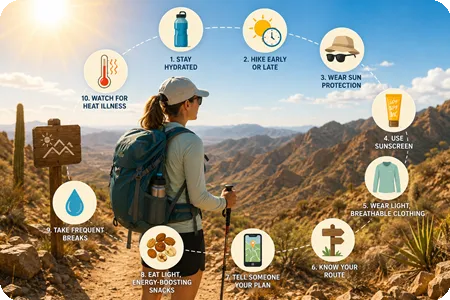
Summer hiking is one of the best ways to get outside and explore — but the heat can turn a fun adventure into a dangerous situation fast. Whether you’re tackling desert trails, humid forest paths, or sun-drenched ridgelines, knowing how to hike safely in hot weather can make all the difference.
Here are 10 essential tips to keep you cool, hydrated, and safe on every summer hike.
1. Hit the Trail Early — Wrap Up Late
Timing is everything when hiking in the heat. The hottest part of the day typically falls between noon and 3 p.m., so plan your hike around it. Start at sunrise when temps are coolest, take a long shaded lunch break in the early afternoon, then finish your miles in the evening. Just throw a headlamp in your pack in case you’re still out after sunset.
2. Pick the Right Trail
Not all trails are created equal when it comes to summer heat. A shaded forest trail is going to feel drastically different from an exposed ridgeline. Prioritize routes with tree cover and, even better, trails that follow a river or creek — natural water sources let you refill your bottles and cool off along the way.
3. Wear the Right Gear
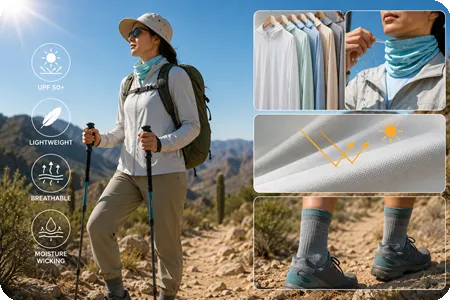
It’s tempting to throw on shorts and a tank top, but covering up actually keeps you cooler in direct sun. Look for lightweight, loose-fitting clothing in light colors that reflect heat. Moisture-wicking fabrics with UPF 50+ protection are ideal. A neck gaiter is a game-changer — wet it down and snap it a few times for instant relief from the heat. Don’t forget quality hiking socks that wick moisture away from your feet.
4. Protect Your Skin
Sun protection isn’t optional on a hot-weather hike. Apply a broad-spectrum sunscreen with SPF 50+ before heading out and reapply throughout the day. Look for reef-safe formulas free from oxybenzone and parabens. Pair your sunscreen with a wide-brimmed hat and UV-blocking sunglasses to shield your face and eyes.
5. Stay Hydrated — and Do It Right
Hydration is always important on the trail, but in the heat it’s critical. The key isn’t just drinking water — it’s drinking consistently. Sipping small amounts regularly throughout your hike is far more effective than chugging water after long stretches without any. A hydration bladder makes it easy to drink on the go. And always bring more water than you think you’ll need — summer water sources can dry up or be unreliable.
6. Snack Smart with Salty Foods
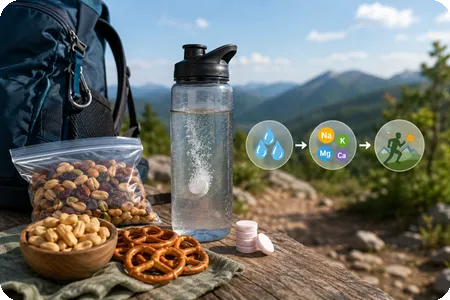
When you sweat, you lose electrolytes — and water alone won’t replace them. Pack salty snacks like trail mix, pretzels, or peanuts to restore sodium and keep your energy up. Electrolyte tablets dropped into your water bottle are another easy, effective option to keep your electrolyte levels balanced during long summer hikes.
7. Slow Down and Take More Breaks
Summer hikes aren’t the time to push your pace. Slow down, hike at a comfortable rhythm, and stop whenever you find a shaded spot. Take your pack off, sit down, and let your body recover. It’s also a great chance to air out your feet — peeling off your boots and socks for 10 minutes can do wonders for blister prevention.
8. Pack a Few Extra Essentials
Beyond your standard day hike kit, a few extras are worth adding in the summer: bring an extra pair or two of hiking socks (fresh, dry socks mid-hike feel absolutely incredible), and don’t forget bug spray. Shaded trails combined with heat and sweat create prime conditions for insects.
9. Check the Weather Before You Go
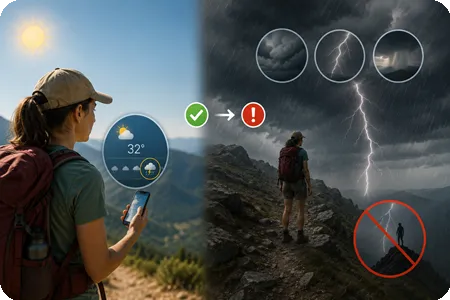
You already know it’s going to be hot — but summer heat also triggers sudden, intense thunderstorms. Always check the forecast before your hike, and know the warning signs of an incoming storm. Getting caught in a lightning storm on an exposed trail is a serious risk that a quick weather check can help you avoid.
10. Know the Signs of Heat Exhaustion and Heatstroke
Heat-related illness can escalate quickly, so it’s essential to recognize the symptoms early.
Heat exhaustion symptoms include:
- Heavy sweating
- Cool, pale, or clammy skin
- Headache and dizziness
- Muscle cramps
- Nausea
- Weakness or fatigue
- Weak, rapid pulse
If you or your hiking partner show these signs, get to shade immediately, cool down with a damp cloth, drink water, and eat a salty snack. Seek medical attention if symptoms don’t improve.
Heatstroke symptoms include:
- Confusion or disorientation
- Hot, dry, flushed skin
- Rapid breathing and racing heart
- Nausea or vomiting
- Severe headache
Heatstroke is a medical emergency. Get out of the sun, cool the person down by any means available, and call for emergency help immediately.
Final Thoughts
Hiking in hot weather doesn’t have to be miserable — or dangerous — if you go in prepared. With the right timing, gear, hydration strategy, and awareness of heat-related illness, you can enjoy the trails all summer long. Stay cool out there.