
How to Choose the Right One for Every Trip
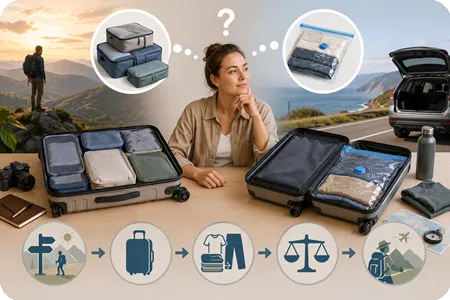
Whether you’re a weekend warrior or a long-haul road tripper, one question comes up every time you start packing: packing cubes or compression bags? The right choice can mean the difference between a bag that’s a breeze to navigate and one that turns into a chaotic pile of crumpled clothes at 6 a.m. in a hotel room.
This guide walks you through everything you need to know — step by step — so you can pack smarter and travel lighter, no matter where you’re headed.
1. Understanding Packing Cubes
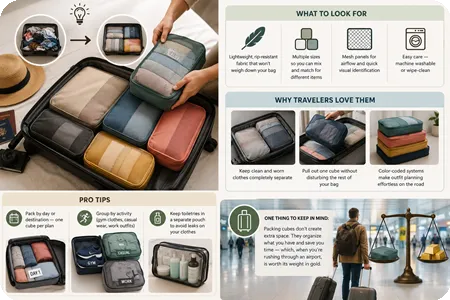
If you’ve ever dug through an entire suitcase just to find one clean shirt, packing cubes are about to change your life. These lightweight fabric pouches let you group clothes by type, outfit, or activity — so everything has a place and you can grab what you need in seconds.
What to look for in a good packing cube:
- Lightweight, rip-resistant fabric that won’t weigh down your bag
- Multiple sizes so you can mix and match for different items
- Mesh panels for airflow and quick visual identification
- Easy care — machine washable or wipe-clean
Why travelers love them:
- Keep clean and worn clothes completely separate
- Pull out one cube without disturbing the rest of your bag
- Color-coded systems make outfit planning effortless on the road
Pro tips:
- Pack by day or destination — one cube per plan
- Group by activity (gym clothes, casual wear, work outfits)
- Keep toiletries in a separate pouch to avoid leaks on your clothes
One thing to keep in mind: packing cubes don’t create extra space. They organize what you have and save you time — which, when you’re rushing through an airport, is worth its weight in gold.
2. The Magic of Compression Bags
Got a bulky jacket, a thick sweater, or three pairs of jeans you “absolutely need”? Compression bags are your best friend. By squeezing out excess air, they shrink soft items down dramatically — freeing up inches of space in your bag.
Where compression bags shine:
- Space savings — Ideal for bulky layers, thick knits, and oversized hoodies
- Protection — Sealed bags keep clothes clean and dry even in damp luggage holds
- Simple to use — Roll out the air or use a vacuum pump; it gets fast with practice
Heads up: Once sealed, getting to a single item means opening the whole bag. If you’re a frequent outfit-switcher during travel, this can slow you down. Use compression bags for items you won’t need until you arrive.
Quick tips:
- Use compression bags for bulky, infrequently accessed items only
- Label bags by content or color-code them
- Keep a small pair of scissors or clips handy for quick access
3. Weight Considerations
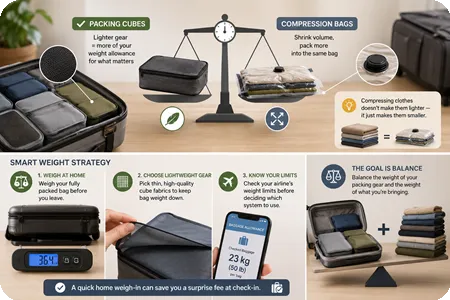
Every ounce counts when you’re traveling by air. Packing cubes are generally lighter than compression bags — no air valves, no thick plastic. If you’re tight on your weight allowance, cubes usually come out ahead.
That said, compression bags let you pack more volume into the same bag, which can help you stay under weight limits when you’re bringing extra gear. Just remember: compressing clothes doesn’t make them lighter — it just makes them smaller.
Smart weight strategy:
- Weigh your fully packed bag at home before you leave
- Choose thin, high-quality cube fabrics to keep bag weight down
- Know your airline’s weight limits before deciding which system to use
The goal is a balance between the weight of your packing gear and the weight of what you’re bringing. A quick home weigh-in can save you a surprise fee at check-in.
4. Durability and Longevity
Good packing gear should outlast at least a few years of trips — not fall apart after one flight. Durability pays off fast when you’re not replacing gear every season.
For packing cubes, look for:
- Reinforced seams and smooth, reliable zippers
- Sturdy nylon or polyester fabric that handles daily packing and unpacking
For compression bags, look for:
- Thick plastic or laminate that resists punctures and tears
- Airtight valves that stay sealed under pressure
Before you buy: Tug the zipper, press the seams, and bend the bag gently to check for weak points. Look for a warranty — any quality brand should stand behind their product.
Taking proper care extends the life of both: air dry your cubes after washing, and wipe compression bags clean to keep the seal intact.
5. Accessibility and Ease of Use
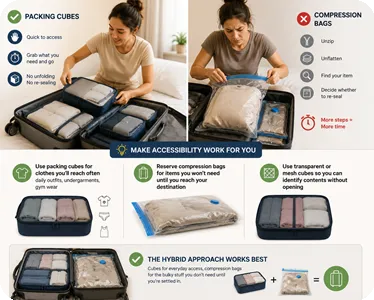
Speed matters when you’re packing and unpacking multiple times a trip. Packing cubes win here — hands down. You pull out a cube, grab what you need, and you’re done. No unfolding, no re-sealing.
Compression bags require more steps: unzip, unflatten, find your item, then decide whether to re-seal. If you’re in a hurry (and when are you not?), those extra steps add up.
Make accessibility work for you:
- Use packing cubes for clothes you’ll reach often — daily outfits, undergarments, gym wear
- Reserve compression bags for items you won’t need until you reach your destination
- Use transparent or mesh cubes so you can identify contents without opening
A hybrid approach works well for most trips: cubes for everyday access, compression bags for the bulky stuff you don’t need until you’re settled in.
6. Price Point
You don’t need to spend a fortune on packing gear, but going too cheap usually backfires with broken zippers and split seams after a few trips.
Smart shopping tips:
- Buy sets, not singles — Per-unit cost drops significantly with multi-packs
- Watch for sales — Travel gear goes on sale around major holidays and travel seasons
- Prioritize quality over savings — A $12 cube set that lasts for years beats a $5 set you replace twice
| Type | Format | Pros | Cons |
|---|---|---|---|
| Packing Cubes | 8-piece set | Organized, easy access | No space savings |
| Compression Bags | 5-piece set | Saves bulk space | Slower access |
| Premium Packing Cubes | 7-piece set | Very durable, great for frequent travel | Heavier |
If you travel multiple times a year, invest in one quality set of each and you’ll be covered for most trips.
7. Versatility for Different Trips
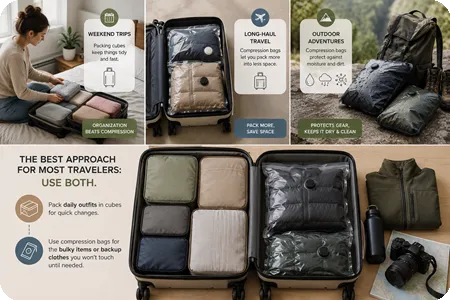
Your packing system should adapt to your trip — not the other way around.
- Weekend trips: Packing cubes keep things tidy and fast. You’re not hauling much, so organization beats compression.
- Long-haul travel: Compression bags let you pack more into less space — great for trips where you’re bringing multiple layers or staying somewhere for weeks.
- Outdoor adventures: Compression bags protect against moisture and dirt. Use them for towels, rain gear, and extra socks.
The best approach for most travelers: Use both. Pack daily outfits in cubes for quick changes. Use compression bags for the bulky items or backup clothes you won’t touch until needed.
8. Packing Techniques
The tool matters, but so does the technique. Here’s how to get the most out of whichever system you choose:
- Roll, don’t fold — Rolling reduces wrinkles and saves space in both cubes and compression bags
- Layer by weight — Heavy items on the bottom, lighter fabrics on top
- Pack by outfit — One complete look per cube makes mornings on the road effortless
- Fill the gaps — Stuff socks and small items into empty corners to prevent shifting
- Don’t overfill compression bags — Leave a little room so they seal cleanly
Starting with a clear system makes unpacking just as easy as packing — and that matters at the end of a long travel day.
9. Environmental Impact
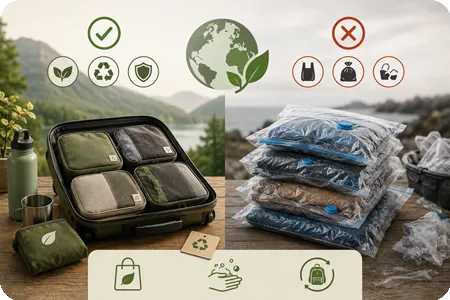
Your packing choices have a small but real environmental footprint. Packing cubes made from recycled or responsibly sourced fabrics are a great choice — they last long and can be washed and reused indefinitely.
Compression bags are typically plastic, so if you go that route, choose thick, durable options you can reuse for years rather than cheap, disposable versions.
Green packing tips:
- Choose brands with sustainability commitments or recycled materials
- Avoid single-use plastic sleeves or disposable compression bags
- Take care of your gear — longer lifespan means fewer replacements and less waste
The gear you choose can reflect your values on the road. Durable, reusable packing tools are better for your wallet and the planet.
10. Final Thoughts: Which One Is Right for You?
Here’s the short answer: use both.
Packing cubes win when you need fast access and organization. Compression bags win when you need to fit more into less space. Together, they cover almost every travel scenario.
A simple starting system:
- Pack everyday clothes and outfits in packing cubes
- Use one or two compression bags for bulky items like jackets, sweaters, or backup layers
- Keep a packing checklist so you don’t forget the basics
Ask yourself before you pack:
- What kind of trips do I take most often?
- Do I need faster access or more space?
- How much do I care about staying organized vs. traveling light?
Test this setup on a short trip first. Adjust based on what you actually reach for. The best packing system is the one you’ll actually use — and the one that gets you out the door without stress.